TH
TH
ข่าวอุตสาหกรรม
บ้าน / ข่าว / ข่าวอุตสาหกรรม / การเลือกเครื่องจักร: วิธีประมาณกำลังที่จำเป็นสำหรับเครื่องขนถ่ายแบบสกรู

Selecting the right Screw Ship Unloader for your port operation is a critical decision that directly impacts efficiency, operational costs, and long-term reliability. At the heart of this selection process lies the accurate estimation of power requirements. An undersized motor leads to frequent stalling, increased maintenance, and failure to achieve target unloading rates, while an oversized one results in unnecessary capital expenditure and higher energy consumption. This guide provides a comprehensive, step-by-step approach to estimating the power needed for a Screw Ship Unloader , delving into the key factors and calculations that define screw conveyor power calculation for these complex machines. A proper power estimation for bulk unloader is fundamental to ensuring optimal performance and return on investment.
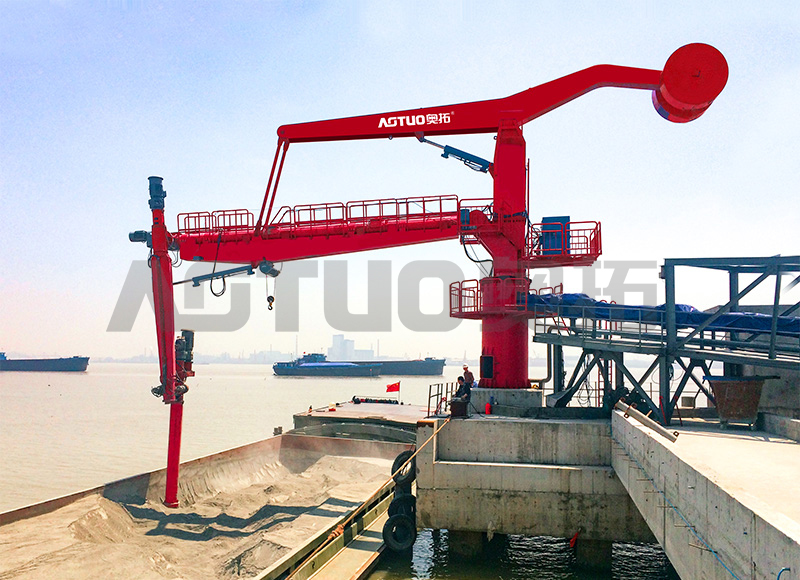
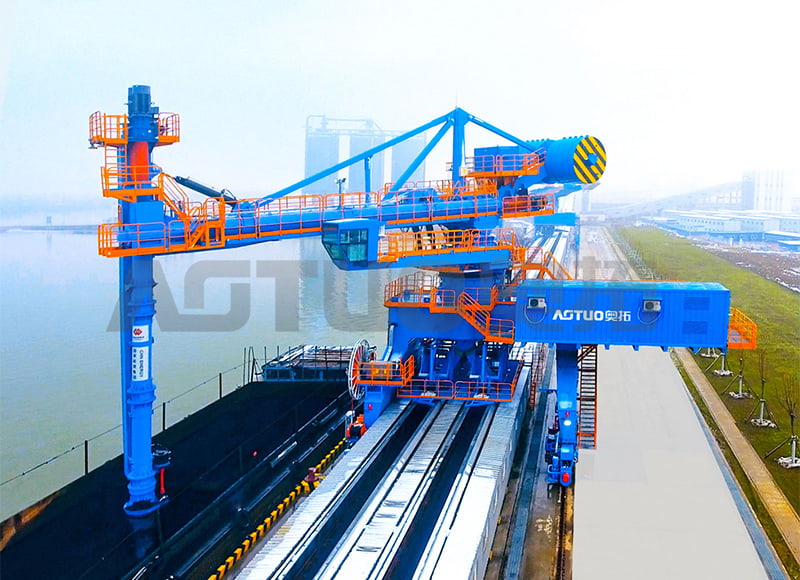
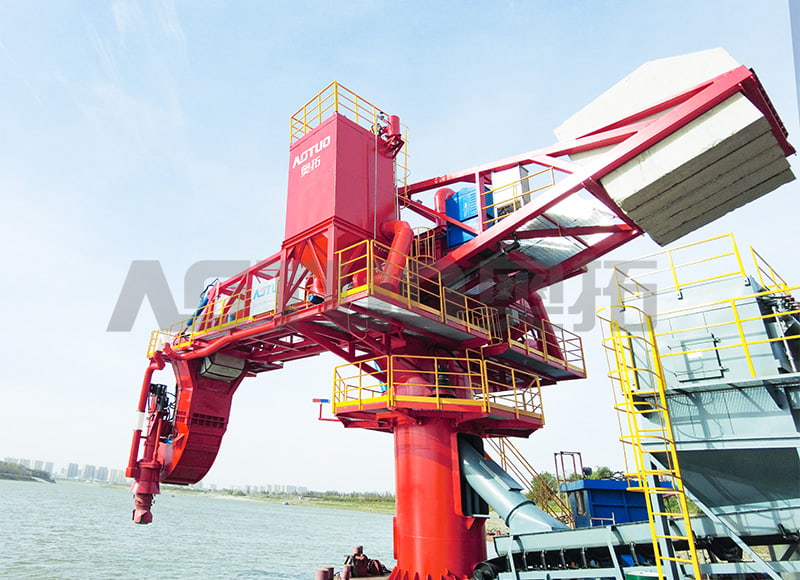
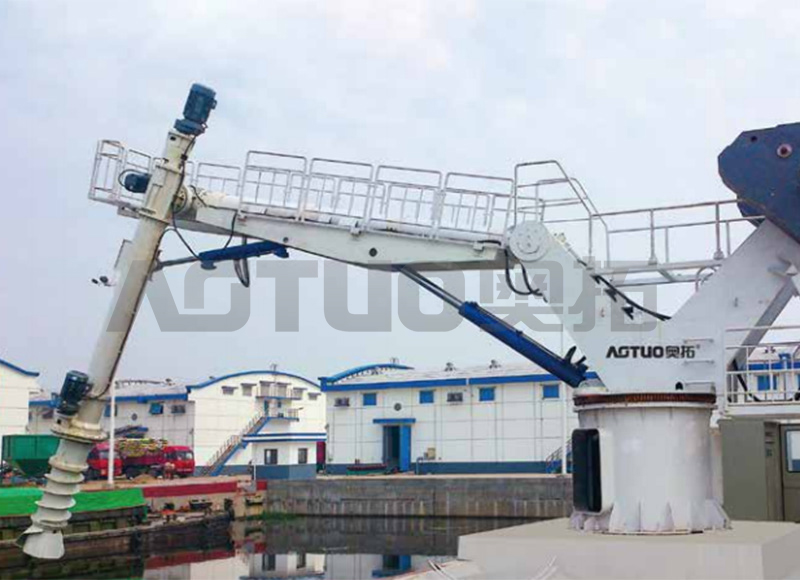
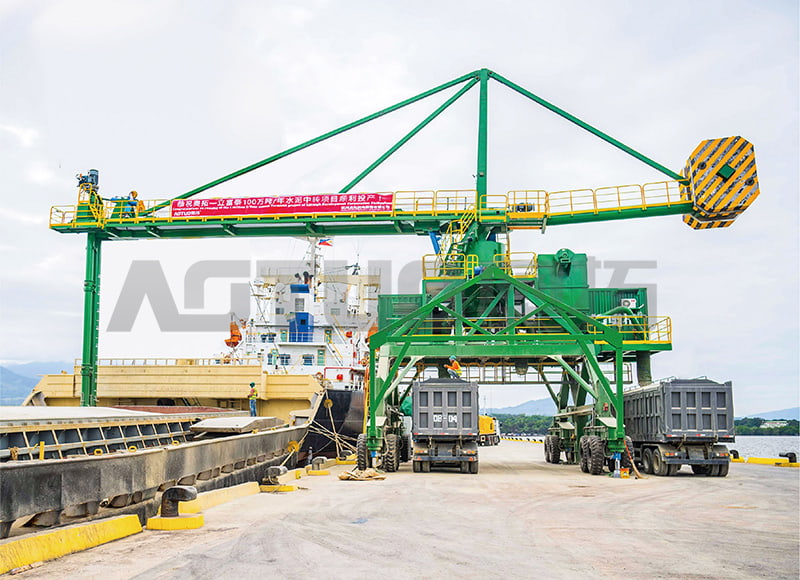
1000-70000 DWT 200-1500t/h Rail mobile Screw Ship Unloader
The total power required to drive a Screw Ship Unloader is not a single value but the sum of several distinct components. Each of these components represents a force that the motor must overcome to move material from the ship's hold to the shore-based receiving system. Understanding these elements is the first step in any accurate unloader motor sizing guide .
Accurately estimating power is a multi-variable problem. Before any calculations can begin, it is essential to gather specific data about the material to be handled and the operational parameters of the unloader. This data forms the foundation of a reliable power estimation for bulk unloader .
The properties of the bulk material are perhaps the most significant variable. The following table provides typical values for common materials, which are crucial inputs for the screw conveyor power calculation .
| Material | Typical Bulk Density (kg/m³) | Recommended Filling Coefficient (φ) | Material Friction Factor (f) Note |
| Wheat / Grain | 750-850 | 30% - 40% | Low (Free-flowing) |
| Cement | 1300-1500 | 20% - 30% | Medium (Abrasive, dusty) |
| Coal | 800-950 | 25% - 35% | Medium to High (Abrasive) |
| Clinker | 1200-1400 | 20% - 30% | High (Very abrasive) |
| Iron Ore | 2200-3200 | 15% - 25% | High (Very dense & abrasive) |
While detailed software is often used for final designs, a manual estimation provides invaluable insight. The following methodology, based on the CEMA (Conveyor Equipment Manufacturers Association) standards, outlines the process for a basic horizontal screw conveyor. This forms the core of any unloader motor sizing guide .
This is the power required to move the mass of the material over the required distance. The formula is:
P H (kW) = (C * L * g) / 3600
Where: C = Capacity (kg/h), L = Conveyor Length (m), g = Gravity (9.81 m/s²). For inclined conveyors, 'L' is replaced with the total conveying distance, which significantly increases the power demand.
This accounts for the friction between the material and the screw/trough. The formula is:
P F (kW) = (C * L * f) / 3670
Where: f is the material friction factor (e.g., 1.5 for cement, 4.0 for clinker).
The calculated power values are theoretical and do not account for mechanical losses. The total required power at the motor shaft is found by dividing the sum of all power components by the overall drive efficiency (η).
P Total = (P H P F P E ) / η
The basic calculation provides a foundation, but real-world screw unloader specification requires accounting for more complex dynamics. Companies with extensive engineering experience, such as Hangzhou Aotuo Mechanical and Electrical Co., Ltd., integrate these factors into their designs for equipment capable of handling up to 3000t/h.

The most common and costly mistake is underestimating the material friction factor ('f' value) and the overall system inefficiency. Engineers often focus on the basic lifting power (P H ) but fail to adequately account for the additional energy required to push abrasive or sticky materials like clinker or wet coal through the trough. This oversight, combined with using an overly optimistic drive efficiency, leads to selecting an undersized motor that will consistently overload, trip, and have a shortened lifespan. A robust unloader motor sizing guide always emphasizes conservative, material-specific friction factors.
While density directly impacts the Material Handling Power (P H ), the material's physical characteristics profoundly influence the Material Friction Power (P F ). An abrasive material like iron ore or clinker has a very high friction factor ('f'), which can multiply the P F component several times over that of a free-flowing material like grain. Furthermore, materials with a tendency to cake or adhere require a lower filling coefficient (φ) to prevent blockages, which may necessitate a larger diameter screw running at a different speed to achieve the same capacity, indirectly affecting the power balance. Therefore, a thorough screw conveyor power calculation is impossible without detailed material properties.
While both have drawbacks, an undersized motor is unequivocally the worse option. An undersized motor will fail to deliver the required capacity, stall under load, overheat, and require constant maintenance, leading to excessive downtime and operating costs. An oversized motor, while involving a higher initial capital outlay and potentially operating at a less efficient point on its power curve, will reliably perform the task. With modern Variable Frequency Drives (VFDs), the operational inefficiency of an oversized motor can be mitigated. Therefore, when in doubt, it is a standard industry practice to apply a safety factor and lean towards a slightly larger motor to ensure reliability, a key principle in screw unloader specification .
You can use it as a starting point, but a ship unloader introduces unique complexities that a standard calculation may not capture. The dynamic nature of the operation—where the length and inclination of the internal screw conveyor can change as the boom is luffed and the ship's position shifts—means the power demand is not constant. Additionally, the need for high reliability in a demanding, 24/7 port environment justifies larger safety factors. It is highly recommended to use specialized engineering software or consult with experienced manufacturers who have a proven track record in power estimation for bulk unloader systems that must perform under these variable and harsh conditions.
มันมุ่งเน้นไปที่การแก้ปัญหาโดยรวมของระบบการถ่ายโอนพอร์ตวัสดุจำนวนมาก
การวิจัยและพัฒนาการผลิตและบริการ
Copyright © Hangzhou Aotuo Mechanical and Electrical Co. , Ltd. All Rights Reserved. ผู้ผลิตระบบถ่ายโอนวัสดุสายพานลำเลียงแบบกำหนดเอง